

深圳市环球众一科技有限公司
专业从事电磁兼容测试、电气安全测试、
无线射频和电信终端类产品测试、化学测试认证和代理

深圳市环球众一科技有限公司
专业从事电磁兼容测试、电气安全测试、
无线射频和电信终端类产品测试、化学测试认证和代理
C-TICK Certification and RCM Registration
Currently, exporting powered products to Australia or listing them on TEMU and Amazon Australia requires C-Tick certification and RCM registration, which are important certification and registration systems for electronic and electrical products in Australia and New Zealand.
1. What is C-Tick certification?
C-Tick certification is a mandatory certification system in Australia and New Zealand, aimed at ensuring that electronic and telecommunications equipment complies with local electromagnetic compatibility (EMC) and telecommunications safety regulations. This certification is jointly administered by the Australian Communications and Media Authority (ACMA) and the New Zealand Communications Commission (NZCC).
The main features of C-Tick certification include:
Mandatory: Electronic and telecommunications equipment sold in Australia and New Zealand must obtain C-Tick certification to demonstrate compliance with local electromagnetic compatibility requirements.
Electromagnetic Compatibility (EMC): The certification focuses on the device's electromagnetic interference (EMI) generated during operation and its ability to withstand electromagnetic susceptibility (EMS), ensuring that the device does not interfere with other devices or systems while functioning properly.
Applicable Product Scope: Covers a wide range of electronic and electrical products, such as motor-driven and heat-generating electrical appliances, power tools, lamps and similar devices, television receivers and audio equipment, information technology products, industrial, scientific and medical instruments.
Classification Management: Products are divided into three categories based on the level of electromagnetic interference they generate.
Class 2 and Class 3 products must have the C-Tick mark, while Class 1 products can apply voluntarily.
Class 1 Products: Devices that cause low interference to wireless spectrum usage, such as manual switches and simple relays.
Class 2 Products: Devices that cause higher interference to wireless spectrum usage, such as switching power supplies, welding machines, dimmers, etc.
Class 3 Products: Devices that cause very high interference to wireless spectrum usage, such as industrial, scientific, and medical instruments.
Certification Process:
Product Testing: Products are tested by third-party laboratories such as GTS Global according to relevant standards.
Report Submission: After passing the tests, the test report is submitted to the Australian certification authority for document review.
Registration Application: Once approved, the Australian importer applies for a registration number from the ACMA.
Mark Usage: The C-Tick mark is affixed to the product.
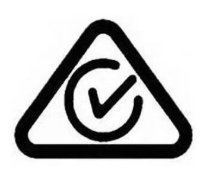
2. What is RCM registration?
RCM (Regulatory Compliance Mark) registration is a registration system implemented in Australia and New Zealand for electrical products, designed to ensure that products comply with both electrical safety regulations and EMC regulations.
Key features of RCM registration include:
Unified Marking: The RCM mark is a unified identifier for electrical products, indicating that the product has passed relevant safety certifications and EMC tests, complying with Australian and New Zealand regulations.
Mandatory: Electronic and electrical products sold in Australia and New Zealand must be registered with RCM to attach the RCM mark to the product.
Coverage: Includes the safety performance of electrical products (SAA certification) and electromagnetic compatibility (C-Tick certification). SAA certification mainly evaluates the safety performance of electrical products, while C-Tick focuses on electromagnetic compatibility.
Application requirements
Safety certification: For high-risk electrical products, an SAA certification certificate is required as proof of product safety performance.
EMC Test Report: All products must provide an EMC test report to prove compliance with local electromagnetic compatibility requirements.
Australian Company Guarantee: RCM registration must be applied for by a registered company in Australia or New Zealand, while Chinese manufacturers and exporters can apply through local partners or importers.
Registration process
Document preparation: including detailed product specifications, technical documents (circuit diagrams, schematics, etc.), product samples, etc.
Testing and evaluation: Product testing and evaluation are conducted by third-party laboratories.
Document review: Submit the test report and other relevant documents to the Australian issuing authority for review.
Registration Application: After approval, the Australian importer applies to ACMA for an RCM registration number.
Website registration: After completing ACMA registration, you also need to register your product information on the website designated by the Australian government.
Certificate and Mark: After successful registration, you will receive an RCM certificate and can affix the RCM mark to your product. The first letter of the certificate number indicates which state or territory issued the certificate.
Summary
C-Tick certification is a mandatory certification focused on electromagnetic compatibility, ensuring that electronic and telecommunications equipment complies with the EMC regulations of Australia and New Zealand.
RCM registration is a unified registration system covering electrical safety performance and electromagnetic compatibility, and is a necessary condition for products to be legally sold in Australia and New Zealand.
For electronics manufacturers and exporters looking to enter the Australian and New Zealand markets, understanding and complying with local C-Tick certification and RCM registration systems is essential.


