

深圳市环球众一科技有限公司
专业从事电磁兼容测试、电气安全测试、
无线射频和电信终端类产品测试、化学测试认证和代理

深圳市环球众一科技有限公司
专业从事电磁兼容测试、电气安全测试、
无线射频和电信终端类产品测试、化学测试认证和代理
Complete Analysis of Hair Dryer Certification Requirements: Different Standards in Various Countries
In today's modern life, hair dryers have already become one of the indispensable small appliances in our daily life. Whether it is quickly styling your hair in the morning or managing your hair after washing at night, it plays a crucial role. When we use a hair dryer, we usually only need to hold its delicate body with one hand to operate it easily. Its working principle is also very ingenious. Once turned on, it generates a strong airflow, which travels along a specific path, either passing slowly over its built-in heating element or directly through the heating element. In this way, the hot air blows evenly onto the wet hair, helping to quickly remove moisture and thus achieve the effect of drying the hair.
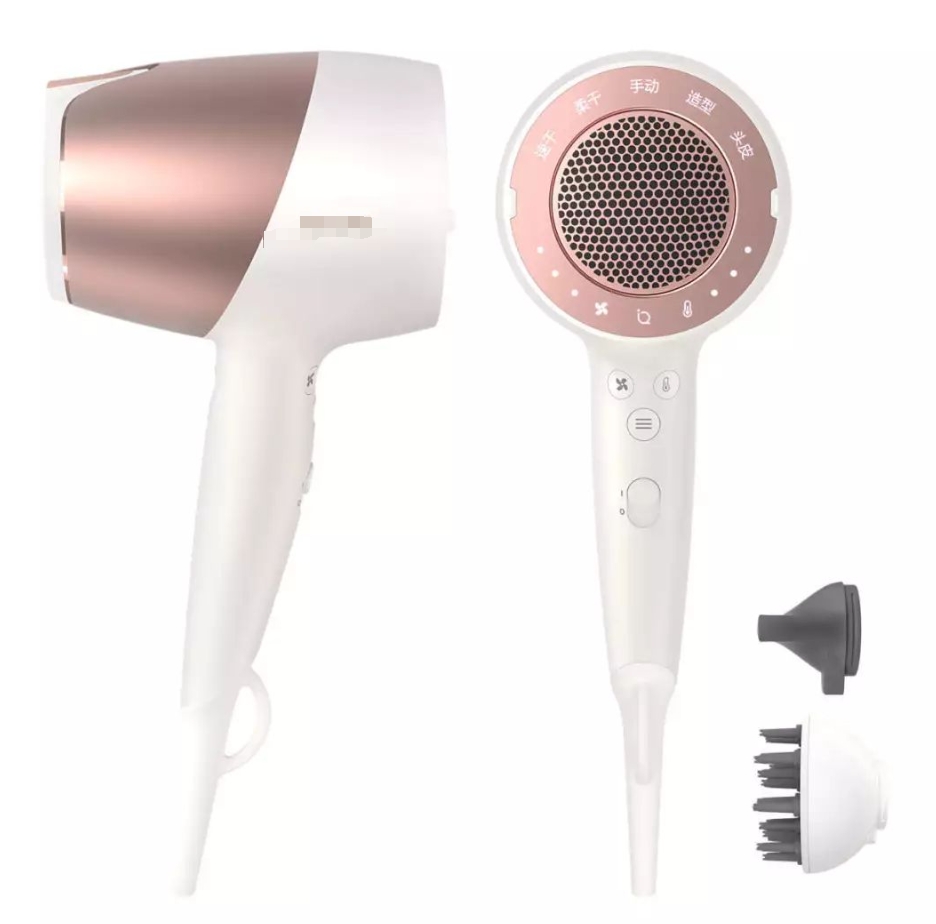
There is a wide variety of hair dryers. To meet the needs and preferences of different consumers, various products have emerged on the market. For example, the common handheld hair dryer is designed to be lightweight and convenient to operate by hand, allowing use anytime and anywhere; styling hair dryers focus more on helping users create various fashionable hairstyles and are equipped with multiple wind power and temperature adjustment functions; styling hair dryers have more professional designs and performance in styling; hot air brushes not only dry hair but also comb it like a brush, making hair smoother; hot air curling irons can easily create charming curls in the hair; curling iron and hair dryer combos cleverly combine curling and drying functions, saving users time and effort; wall-mounted handheld hair dryers can be conveniently installed on the wall without taking up much space; the handheld device of wall-mounted hair dryers provides a more flexible way of use, allowing users to take it down or put it back as needed. These different types of hair dryers add a lot of convenience and beauty to our lives.
However, do you know? In a globalized market environment, different countries have different certification requirements for hair dryers. Today, let's take a deep dive together into these different certification standards and uncover the mystery behind them.
U.S. Market: Strict Safety-First Standards
First, we turn our attention to the U.S. market. As a major consumer country, the demand for various products among American consumers is very strong, naturally including hair dryers. Due to the huge market demand, many brands choose to enter the U.S. market, hoping to grab a share in this vast market.
For handheld hair dryers sold in the U.S. market, there is a very important safety feature—the immersion protection plug. This small plug is not simple; it can effectively prevent electrical leakage in case of accidents, such as when the hair dryer accidentally falls into water or is splashed with water, thus avoiding dangers such as electric shocks. To prove the safety of the product, hair dryers in the U.S. need to meet a series of strict standards.
Among them, UL 859 (Household Electric Personal Grooming Appliance Standard) is an important standard for household hair dryers. This standard has detailed regulations on the structural design of electric hair dryers, from the choice of materials for the outer casing to the layout of internal components, all of which must meet safety and durability requirements. For example, the casing material needs to have good insulation and fire resistance to prevent fire hazards caused by overheating or other reasons; internal wiring connections must be secure and reliable to avoid loosening or short circuits. At the same time, in terms of electrical performance, the standard has clear limits on parameters such as voltage, current, and power to ensure that the product does not pose a threat to users' personal safety during normal use. In addition, mechanical performance is also one of the key evaluation points, such as the service life of switches and the stability of fan speeds, all of which need to undergo rigorous testing and verification.
Another important standard is UL 1727 (Commercial Electric Personal Beauty Appliances Standard), which mainly applies to hair dryers used in commercial settings. Compared with household standards, commercial standards are more stringent in certain aspects. Because the frequency of use in commercial settings is higher, this presents greater challenges for the stability and durability of the products. For example, in terms of electrical performance, commercial standards require stronger anti-interference capability to ensure that the hair dryer can operate stably in a complex commercial environment, free from interference from other electrical devices; in terms of structural design, the cooling system of commercial hair dryers needs to be more well-developed to cope with high temperatures generated during long periods of continuous operation, ensuring the reliability and service life of the product.
These strict standards regulate and constrain hair dryers in multiple ways, fully reflecting the U.S. market’s emphasis on product safety performance. Only hair dryers that have passed these standards’ certification can be legally sold in the U.S. market, allowing consumers to use them with confidence.
EU Market: Multi-Dimensional Strict Regulations
Next, let's take a look at the European market. The European market is known worldwide for its rigorous regulations and high quality standards, and hair dryers are no exception.
The requirements for hair dryers in the European market cover multiple aspects, among which CE - EMC (Electromagnetic Compatibility Directive), CE - LVD (Low Voltage Directive), and ROHS2.0 are the most critical certification standards.
The CE - EMC Directive is mainly intended to ensure the electromagnetic compatibility compliance of hair dryers. In modern society, various electronic devices are everywhere, and the electromagnetic environment is becoming increasingly complex. If a hair dryer has poor electromagnetic compatibility, it may interfere with other surrounding electronic devices and affect their normal operation. Therefore, this directive imposes strict requirements on hair dryers regarding both electromagnetic emissions and immunity. For example, the electromagnetic radiation generated by a hair dryer during operation must be within the prescribed limits and should not interfere with the signal transmission and normal operation of other electronic devices such as televisions, computers, and mobile phones; at the same time, the hair dryer itself must have a certain level of immunity, enabling it to maintain stable performance in a complex electromagnetic environment without being affected by external electromagnetic signals.
The CE - LVD Directive focuses on the low-voltage safety of hair dryers. This directive provides comprehensive regulations on the electrical safety, mechanical safety, and other aspects of hair dryers. In terms of electrical safety, the product is required to have good insulation to prevent users from electric shock during use; the circuit design should be reasonable to avoid dangers such as overvoltage or overcurrent. In terms of mechanical safety, there are clear requirements for the strength of the product's casing, edge and corner design, etc., to prevent users from injury due to accidental collision or compression during use.
The ROHS 2.0 directive is aimed at restricting the use of certain hazardous substances in electrical and electronic equipment. This directive is intended to protect the environment and human health, reducing pollution caused by electronic waste. According to the requirements of this directive, hair dryers must not contain harmful substances such as lead, mercury, cadmium, hexavalent chromium, polybrominated biphenyls (PBB), and polybrominated diphenyl ethers (PBDE). This means that manufacturers must strictly control the selection of raw materials and production processes during manufacturing to ensure that products meet environmental protection requirements.
By strictly adhering to and implementing these standards, the European market ensures that hair dryers sold in the market achieve high levels in terms of quality, safety, and environmental protection, providing strong assurance for consumers' health and usage safety.
UK Market: Unique UKCA Certification
Selling hair dryers in the UK market also has its special certification requirements. If a company wants to sell products in the UK, it needs to obtain UKCA (UK Conformity Assessed) certification.
UKCA certification is a new product certification system introduced by the UK to replace the original CE certification. The implementation of this certification system is an important measure taken by the UK after Brexit to establish its own independent certification system. In many ways, UKCA certification continues the standards and requirements of CE certification, but it also has some unique regulations and characteristics.
For hair dryers, obtaining UKCA certification requires companies to apply and test according to relevant procedures and standards. First, companies need to prepare detailed product technical files, including the product design concept, structural drawings, electrical schematics, material lists, and other information to prove that the product meets the relevant standards and requirements of the UK market. Then, companies need to send product samples to designated testing institutions for strict testing, covering electrical safety, mechanical safety, electromagnetic compatibility, and other aspects. Only when the product has passed all test items and meets the requirements for UKCA certification can the company obtain the UKCA certification mark, allowing the product to be legally sold in the UK market.
Japanese Market: Coexistence of Authoritative Certification and High Performance Requirements
Finally, we come to the Japanese market. Japan is world-renowned for its high standards for product quality and strict regulatory system. Hair dryers sold in the Japanese market also need to meet a series of stringent certification requirements.
Hair dryers need to obtain certification from the Ministry of Economy, Trade and Industry of Japan, which is commonly referred to as the PSE Circle Certification and METI registration. The PSE Circle Certification is one of the most authoritative certifications in Japan and covers multiple aspects of product requirements, including electrical safety, mechanical safety, and chemical hazards. In terms of electrical safety, the certification has strict requirements for a product's grounding measures, insulation resistance, voltage withstand, and other indicators to ensure that users do not encounter electric shocks or other safety accidents during use. Regarding mechanical safety, there are detailed standards for product casing strength, corner treatment, and fan blade safety to prevent users from being injured by mechanical hazards during operation. In terms of chemical hazards, the content of harmful substances in the materials used in the product is strictly limited to avoid potential threats to human health.
In addition, the Japanese market also has very high requirements for the functions and performance of hair dryers. For example, in terms of noise levels, because Japanese consumers place a high value on quality of life, they hope that using a hair dryer will not create excessive noise disturbance. Therefore, hair dryers sold on the market usually adopt advanced noise reduction technology to keep the noise at a relatively low level. In terms of wind speed, to meet the different needs of users for drying speed, hair dryers need to have adjustable wind speed functions and be able to provide sufficient air power at maximum speed to quickly dry hair. Regarding temperature control, precise temperature adjustment functions are essential; too high a temperature can damage hair, while too low a temperature will extend drying time. Therefore, products need to operate stably within a suitable temperature range to provide users with a comfortable experience.
In summary, different countries have varying focuses and differences in hair dryer certification requirements. For businesses, it is crucial to understand the certification requirements of different markets. Only in this way can they better meet market demands and enhance the competitiveness of their products in the international market. At the same time, for consumers, when choosing hair dryer products, it is not enough to focus solely on price and appearance. After all, the safety performance and quality assurance of the product are the most important. By choosing products that have passed relevant certifications and are of reliable quality, we can enjoy the convenience of using hair dryers while ensuring our own safety and health. I hope the above content can help everyone better understand the relevant knowledge of hair dryer certification, enabling us to make wiser choices when purchasing and using hair dryers.


